
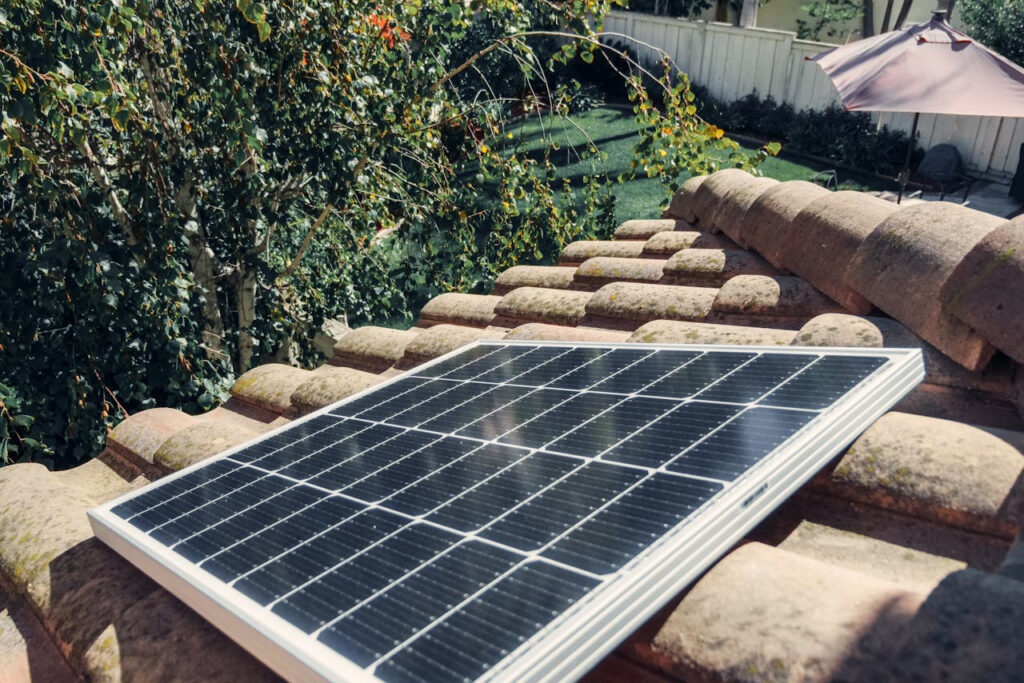
A 600W solar panel does not produce 600W on your rooftop. Under real-world conditions, you’ll get 400 to 500W — sometimes less. The difference is called system losses, and ignoring them is one of the most expensive mistakes you can make when sizing a solar system.
Here’s where every watt goes and why you need at least a 25% buffer.
The 6 Types of System Losses
System losses aren’t a single thing — they’re a combination of six different factors that all chip away at your theoretical output. Understanding each one helps you estimate the right loss factor for your specific situation.
1. Temperature Derating (5–15% loss)
This is usually the biggest single loss factor, and it surprises many people. Solar panels are rated at 25°C (77°F) in the lab. For every degree above that, output drops — typically 0.3 to 0.5% per degree Celsius for crystalline silicon panels.
On a hot summer day with ambient temperature of 35°C, your panels can reach 60–70°C on the surface. That’s 35–45 degrees above the rated temperature, translating to a 10–15% loss in output.
Ironically, the sunniest locations (deserts, tropics) suffer the most from temperature losses. A panel in Arizona summer heat loses more to temperature than a panel in a German spring, even though Arizona gets more sunlight.
2. Inverter Efficiency (5–10% loss)
No inverter converts DC to AC at 100% efficiency. Good quality inverters run at 93–97% efficiency at optimal load. But efficiency drops at very low and very high loads, and cheap inverters can be as low as 85–90%.
This means for every 1 kWh your panels produce, 50–100 Wh is consumed by the inverter itself as heat. Over a year, this adds up to hundreds of kilowatt-hours.
3. Wiring and Connection Losses (2–3% loss)
Every meter of cable between your panels, charge controller, batteries, and inverter has electrical resistance. Current flowing through this resistance generates heat — energy that never reaches your appliances.
Longer cable runs and undersized wire gauges increase these losses. A well-designed system with properly sized cables keeps wiring losses under 2%. A poorly designed one with long thin cables can lose 5% or more.
4. Dust, Dirt, and Soiling (2–5% loss)
Unless you clean your panels regularly, dust, pollen, bird droppings, and grime gradually accumulate on the glass surface and block sunlight. In dusty or arid environments, soiling losses can reach 5–7% between cleanings.
Panels mounted at steeper angles shed dust more easily from rain. Flat-mounted panels in dry climates are the worst case for soiling. Even dew and moisture can combine with dust to create a film that’s surprisingly opaque.
5. Panel Mismatch (1–2% loss)
Even panels from the same manufacturer and production batch have slight variations in output. When connected in a string, the weakest panel limits the entire string’s performance. This is called mismatch loss.
MPPT charge controllers and microinverters reduce mismatch losses compared to PWM controllers and string inverters, but they can’t eliminate them entirely.
6. Panel Degradation (0.5–0.8% per year)
Solar panels lose a small amount of output capacity every year. Most manufacturers guarantee at least 80% output at 25 years, which translates to roughly 0.5–0.8% degradation per year.
A brand-new 600W panel will produce about 570W after 10 years and 510W after 20 years. This gradual decline means a system sized perfectly for year one will be slightly undersized by year five.
Adding Them All Up
In a typical installation, these losses compound. A rough breakdown for a well-designed system in a warm climate: temperature 10%, inverter 6%, wiring 2%, soiling 3%, mismatch 1.5%, first-year degradation 0.5%. Total: roughly 23%.
In a hot, dusty environment with long cable runs, this easily reaches 30–35%. In a cooler, clean climate with short cables, it might be as low as 15–18%.
The industry-standard rule of thumb is a 25% loss factor, which works as a reasonable middle ground for most installations. But you should adjust this based on your specific conditions.
What This Means for Your Panel Count
If your home needs 8 kWh per day and each panel produces 3 kWh per day (rated), you might think you need 3 panels. But with 25% losses, each panel effectively produces 2.25 kWh per day in real conditions. Now you need 4 panels.
That’s one extra panel — and the difference between a system that works and one that consistently falls short.
Adjust It in the Calculator
Our Solar System Calculator defaults to 25% system losses, but you can adjust this from 10% to 50% in the settings. If you’re in a hot desert climate, bump it up to 30%. If you’re in a cool maritime climate with frequently cleaned panels, you might bring it down to 20%.
Pingback: 12V vs 24V vs 48V: How to Choose the Right Voltage for Your Solar System | Solar System Calculator
Pingback: How Many Solar Panels Do You Need to Run an Air Conditioner? | Solar System Calculator
Pingback: Series vs Parallel Solar Panels: How to Wire Your System | Solar System Calculator
Pingback: How Many Solar Panels to Run a Refrigerator Off-Grid? | Solar System Calculator
Pingback: How Much Solar Power Do You Get in Winter? | Solar System Calculator